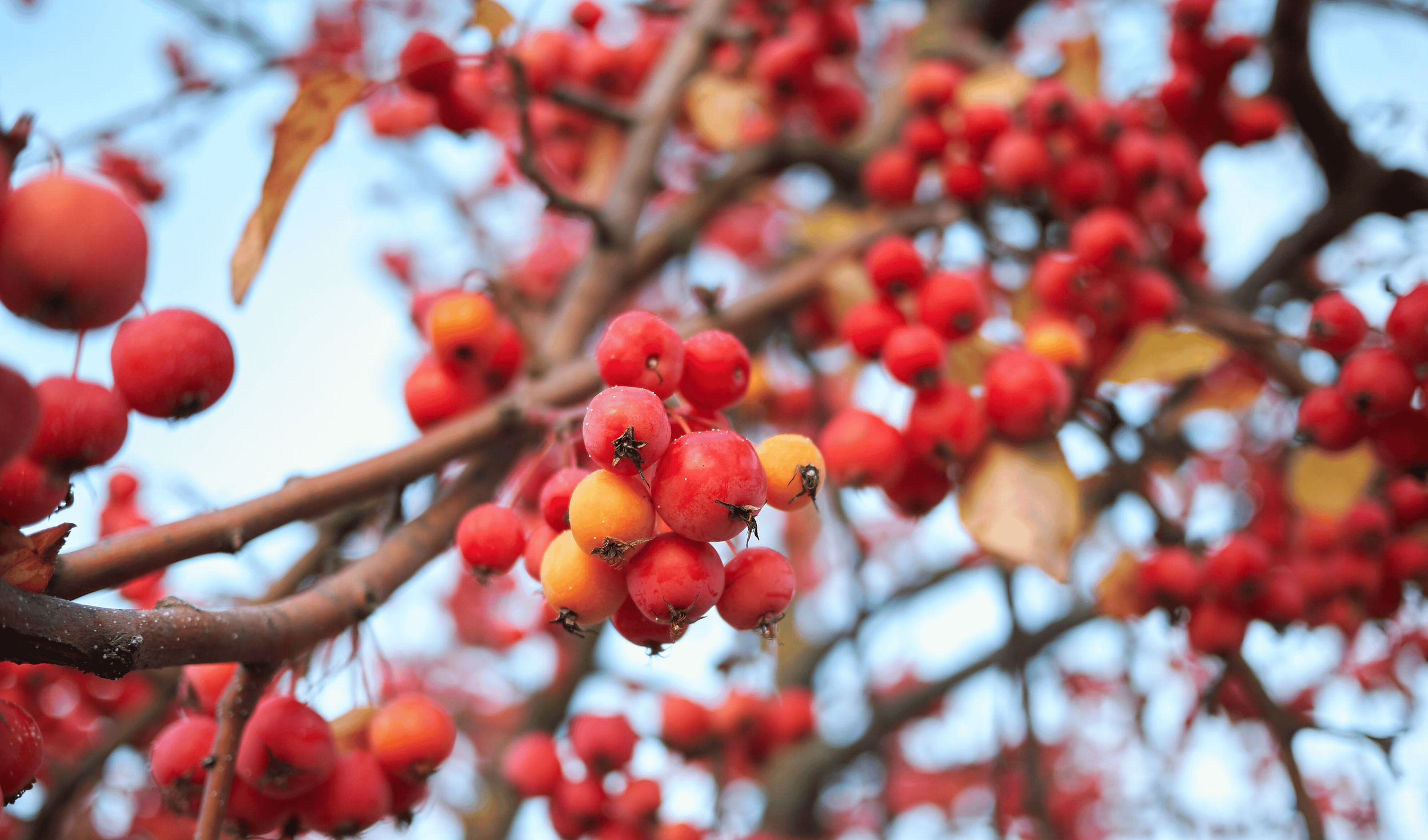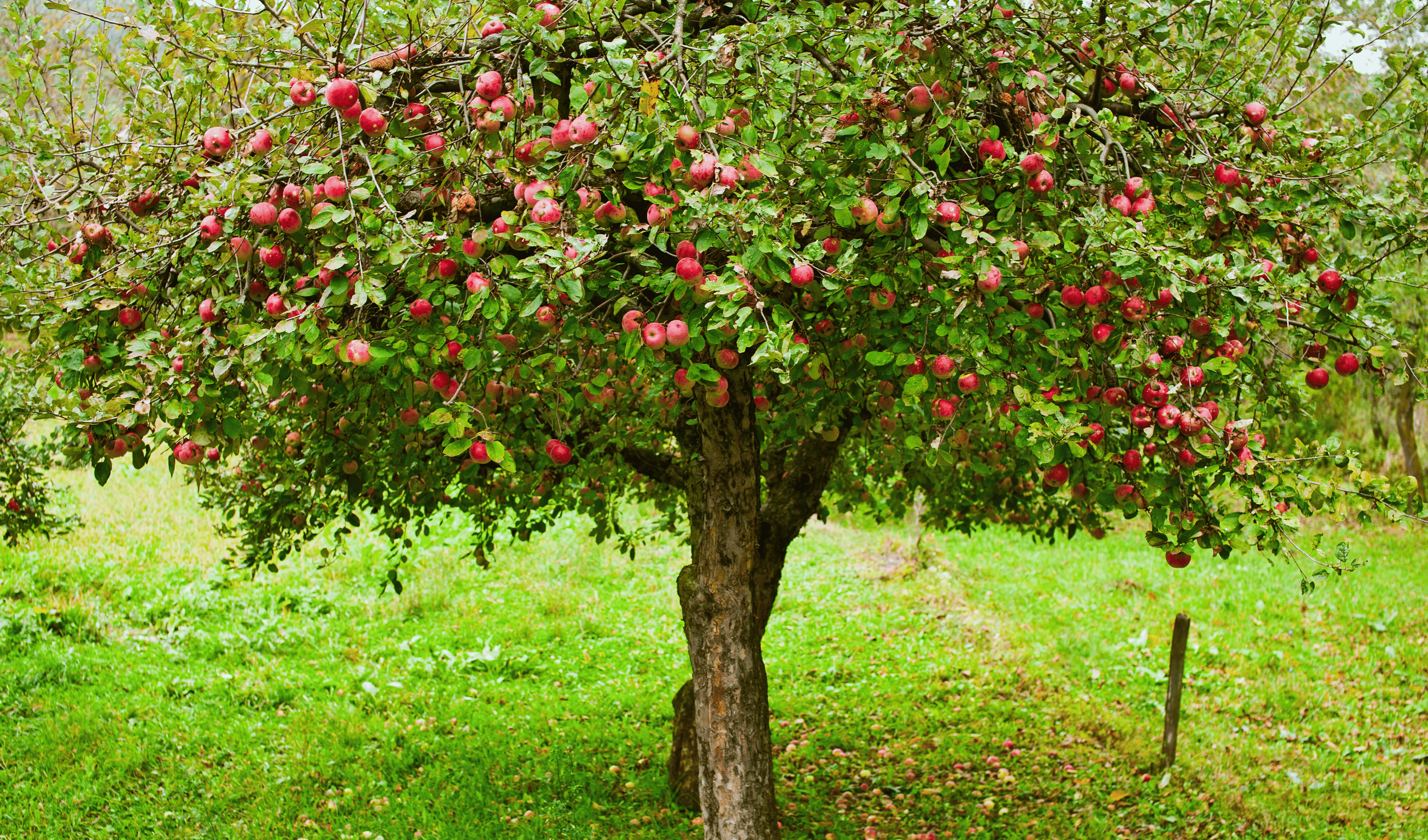
Crabapple at the Shakespeare Garden
Malus sylvestris
There is an interesting legend connecting Shakespeare to the crabapple. Supposedly, Shakespeare spent the night under a particular crabapple tree. That very tree was alleged to have acquired magical powers as a result. The story of the tree and its powers became somewhat of a shrine. As with many shrines, it began to disappear bit by bit until it was finally uprooted.
The crabapple is native to England and would have been very familiar to Shakespeare. With the domestication of the apple tree, the crabapple fell to the background. The crabapple is a host tree for mistletoe, and it otherwise plays heavily with the Christmas spirit and legends. The crabapple would be roasted and used with Wassail. One old legend claims that if you throw a crabapple into a fire and it pops, that is a sign that your true love returns your love. Shakespeare refers to the crabapple many times in his plays, and he typically refers to this tree and its fruit as simple crab, which may have caused some confusion in interpretation.
The crabapple is a beautiful flowering deciduous tree that will grow to be 20 to 30 feet tall. The tree prefers full sun and well-drained but moist soil. It is hardy in zones 4 through 8. While fairly easy to grow, it can be susceptible to a variety of fungal infections. The crab is indeed beautiful and fragrant and provides a great food source for wildlife.
Shakespeare references to Primrose:
-
Caliban
I prithee, let me bring thee where crabs grow.
-
Porter
Fetch me a dozen crab-tree staves,
and strong ones.
-
Holofernes/Pedant
And anon falleth
Like a crab on the face of terra—
The soil, the land, the earth.