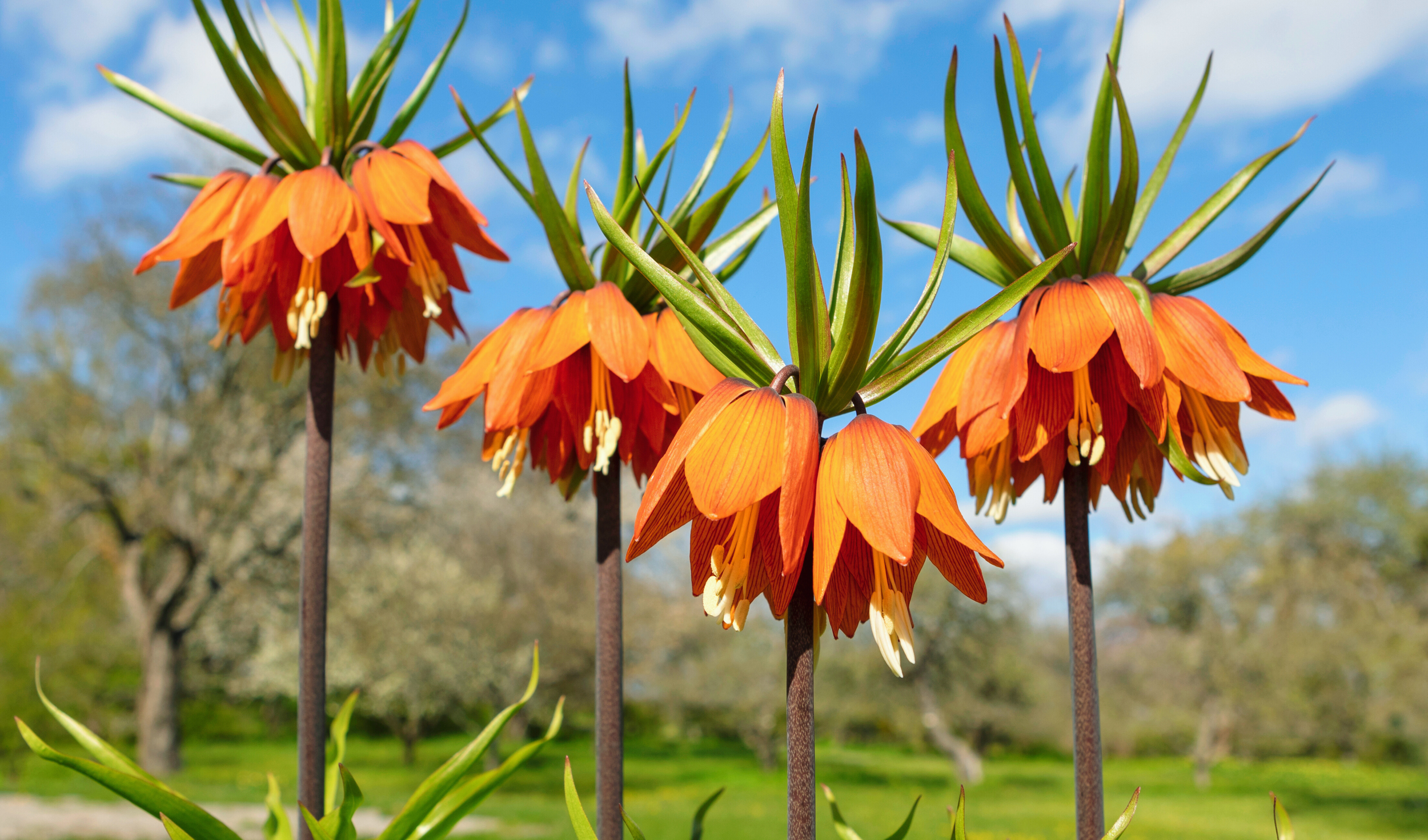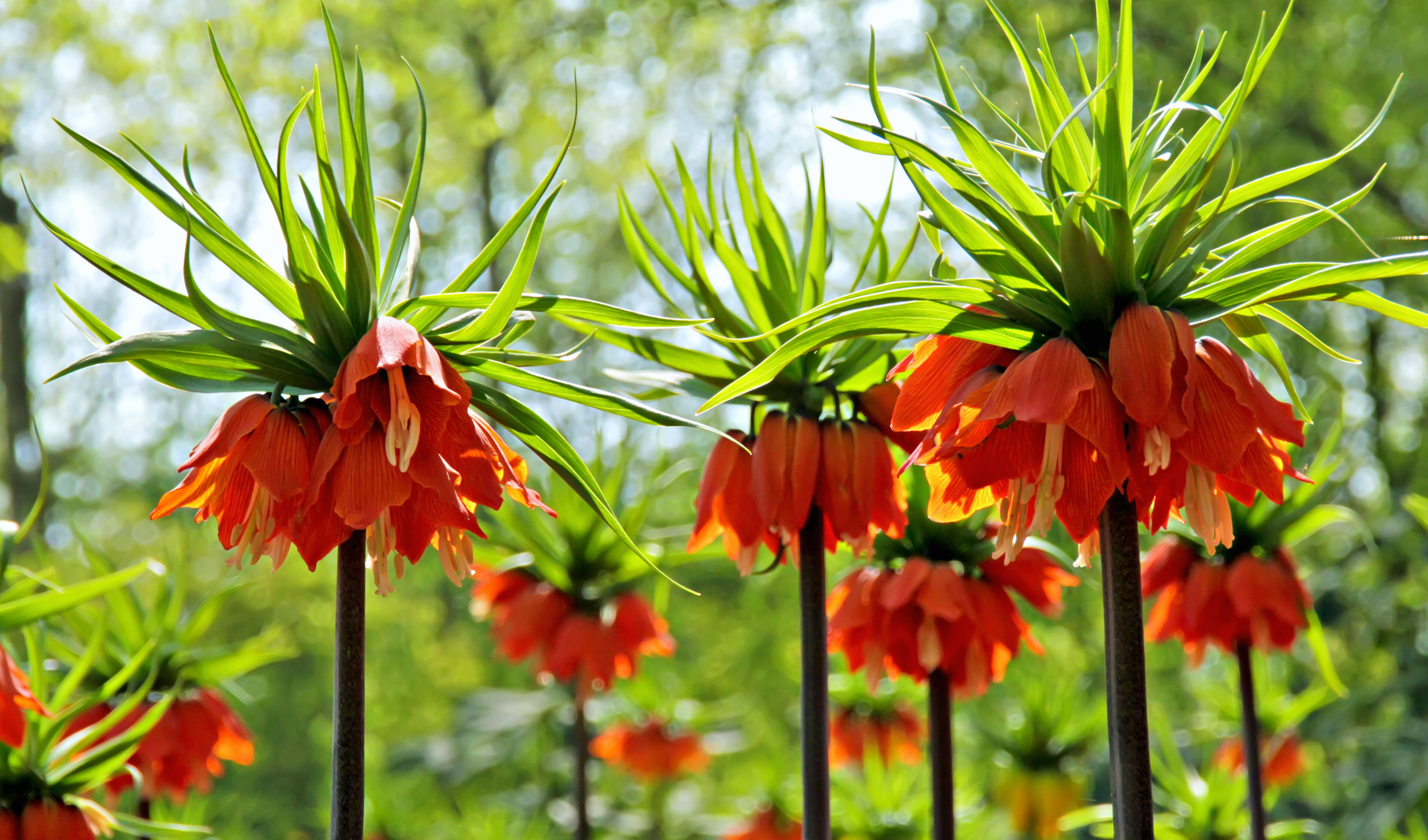
Crown Imperial at the Shakespeare Garden
Fritillaria imperialis
Perdita, in Winter’s Tale, mentions this exotic plant and that she wants it added to gilly flowers or carnations. It is the only specific mention of the plant in Shakespeare’s plays, but it deserves a place in the Shakespeare garden by its spectacular visual display. Shakespeare’s reference is as a beautiful flower and as a symbol of royalty, majesty, and loss.
The plant was introduced in Europe around 1580 and has a tall upright stem with a display of leaves at the top, beneath the leaves, the blossoms are downward facing. It is said that the blossoms are hanging their heads in shame because they stared at Jesus on his way to the crucifix.
This plant is beautiful to observe, but not too closely, as the fragrance is not to be savored. Some gardeners say that planting the crown imperial is a way to rid the garden of moles.
The plant is native to western Asia and Turkey. It grows to a height of 3 to 4 feet. One of the first blooms in the spring, it is certainly well-positioned in the center of the garden. It prefers full sun to part shade, growing in zones 5-8. Enjoy this beautiful flower, but perhaps from a distance.
Shakespeare references to Primrose:
-
Perdita
Bold oxlips, and
The crown imperial.