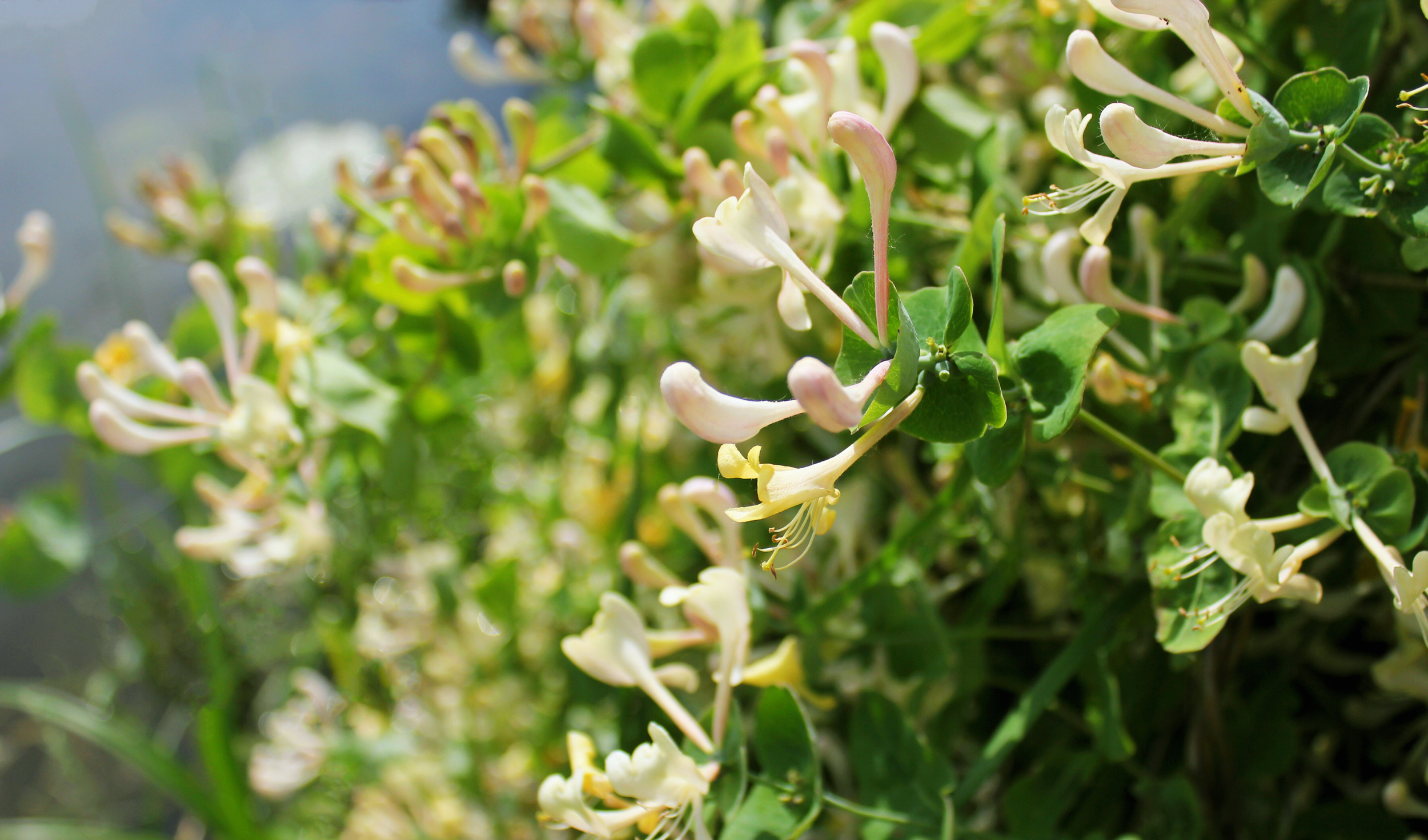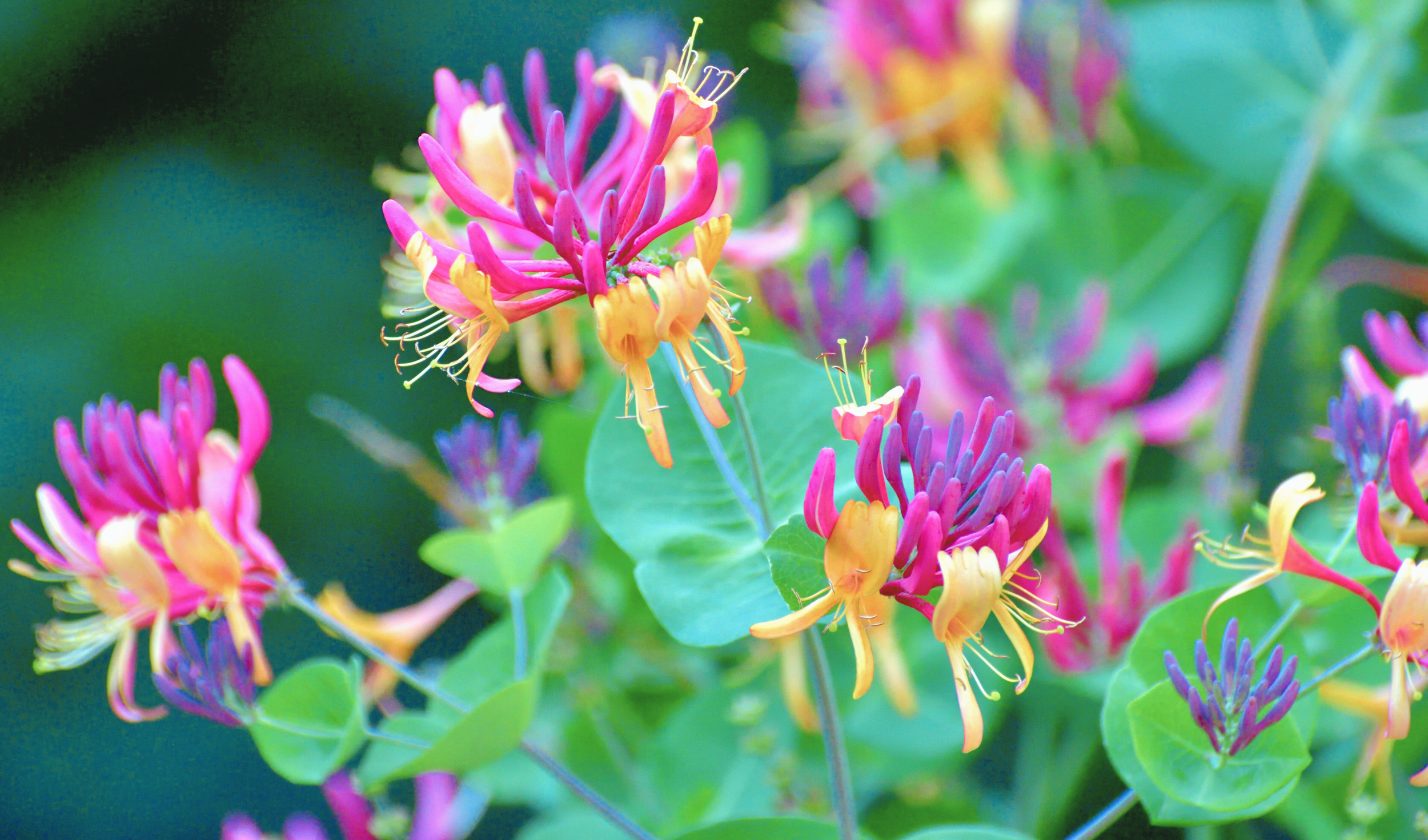
Woodbine Honeysuckle at the Shakespeare Garden
Lonicera periclymenum
Some of the plants that Shakespeare mentions may not be the plants of modern day or of different climate zones. Today, when discussing woodbine, one might be referring to Virginia creeper. Based on descriptions, the woodbine of Shakespeare is clearly honeysuckle. Shakespeare’s famous description of woodbine in Midsummer Night’s Dream certainly evokes the fragrance and vining of honeysuckle. Honeysuckle was common in gardens to provide fragrant cover and privacy for arbors.
The most common use of honeysuckle in the garden was structural, but the botanist Gerard discusses the distillation of honeysuckle to be used in aiding childbirth. The thick and gnarled vines of the plant often became walking sticks. The leaves and flowers were used for medicinal purposes, knowing that the berries were poisonous.
Shakespeare describes the sensual fragrance of honeysuckle and the intertwining of the vines as a representation of romantic entanglements.
Honeysuckle is described as providing a “paradise for wildlife.” It attracts birds and pollinators. The blooms appear in late summer and early autumn. The thick vines can grow to a height of 20 feet. This deciduous shrub is hardy in zones 5-9. It thrives in full to partial sun and prefers well drained soil. There should be caution when planting honeysuckle as it can be beautiful but invasive.
Shakespeare references to Primrose:
-
Titania
Sleep thou, and I will wind thee in my arms.
So doth the woodbine,
The sweet honeysuckle
Gently entwist; the female ivy so
Enrings the barky finger of the elm.
-
Oberon
I know a bank where the wild thyme blows,
Where oxlips and the nodding violet grows,
Quite over-canopied
with luscious woodbine.
-
Hero
And bid her steal into the pleached bower.
Where honeysuckles, repen’d by the sun,
Forbid the sun to enter.